Gastón Tourn's board had three questions for him.
First: "Why do we still have a videographer?" Next: "And why do we still have a designer?" And finally, the one nobody wants to hear: "Do we still need you?"
Gastón, Chief Growth Officer at Oddbox, put those three questions up on screen at aiblLIVE in London on 20 October. I suspect plenty of marketers in the room had heard something similar.
His board wanted what most boards want right now. Use AI to make the ads. Cut the cost.
He waited
What Gastón did next is the bit I'd want every business owner to hear. He didn't rush.
"I didn't use AI immediately to make ads," he said. "I waited a little bit. I just wanted to see what happens when other brands actually do what they have been asked."
So he watched. One food brand ran obviously AI-made ads, and he put the comments on screen. "Using generative AI means I'd never use your products." "AI slop = scam product. Bet you're cutting corners with the food too." "Stop the AI slop."
That second one is the killer. People disliked the ad, and then they read it as a sign about the food.
His conclusion: "If there is one thing you cannot afford in paid social, it's being fake."
The numbers back him up
It's more than a feeling in the comments section. The Harris Poll asked UK consumers about it in April 2026, in a report called The Authenticity Trade-Off. Seven in ten said they trust adverts made entirely by humans. That falls to four in ten when AI tools are used. And to just two in ten when the advert is generated by AI alone.
That middle number is the interesting one. Using AI as a tool costs you some trust. Handing the whole thing over costs you most of it.
What Oddbox did instead
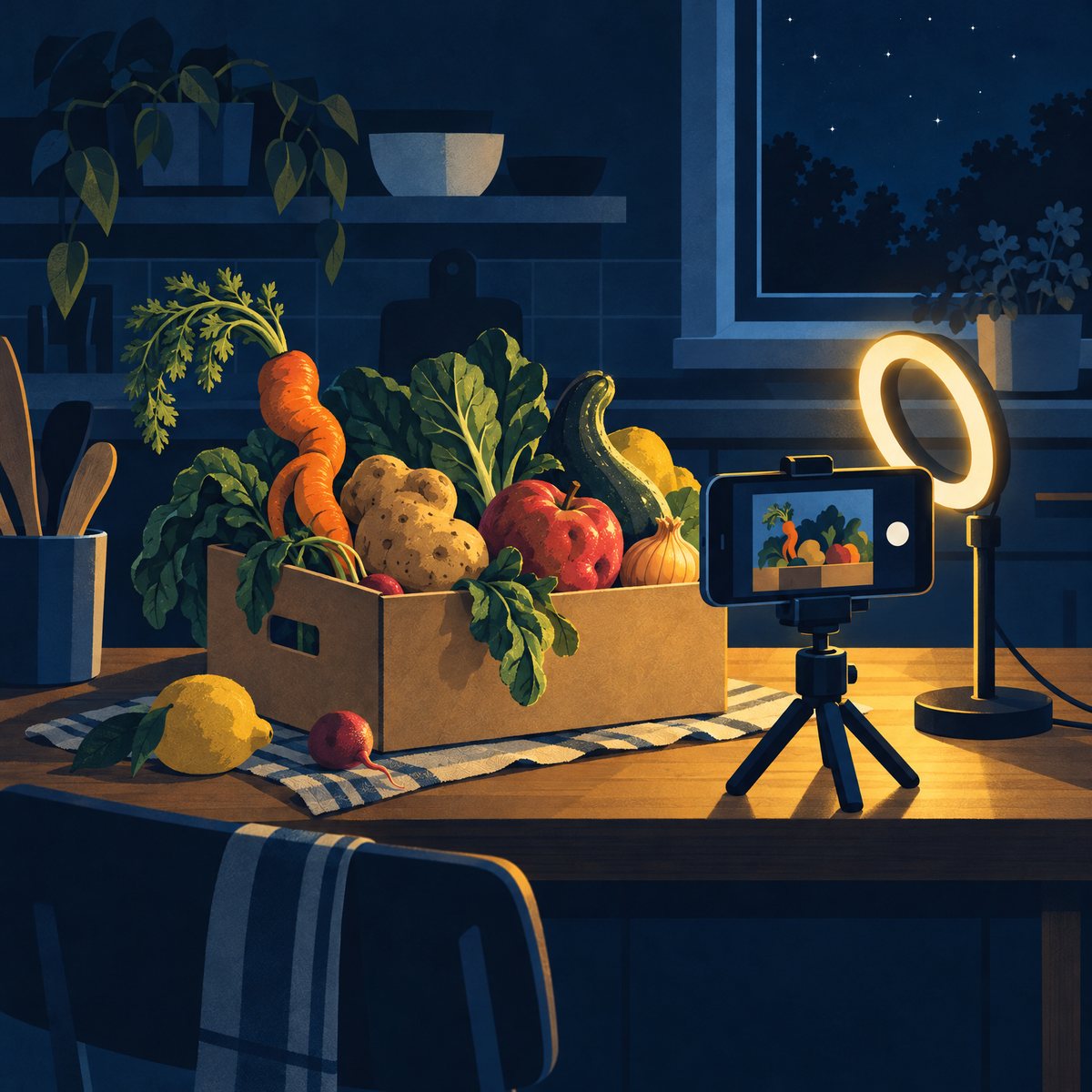
Their best ad of the year was made by a customer. Oddbox reached out to customers and asked if they could make the ad themselves. It cost one box. The whole thing was made in less than a day.
Gastón described it as a bit wobbly, sometimes with the phone not quite steady. And he said it delivered a better return than anything they'd tried with AI. "It feels real," he said.
They do still use AI, for the jobs it's good at. Editing an image so a purple broccoli matches the brand's colours. Cutting one video into lots of versions. What they don't use it for is pretending to be people.
Why this matters if you're small
Big brands can survive a backlash. A small business can't afford to have its customers wonder whether it's cutting corners elsewhere.
Small businesses have a huge advantage here, though. You already have real customers, real faces and real stories. Forget the film crew: a phone and someone happy to talk about you will do.
Just imagine your next ad being thirty seconds of a real customer, in their kitchen or their office, saying what changed for them. Wobbly, honest and unmistakably real. Most people will trust that more than anything a machine could make, and the Harris figures suggest they'd be right to.
All it takes is one happy customer willing to record a short video on their phone. One question is enough, something like "What was it like before you found us, and what's it like now?"
I'd love to know how it does next to your usual posts.