
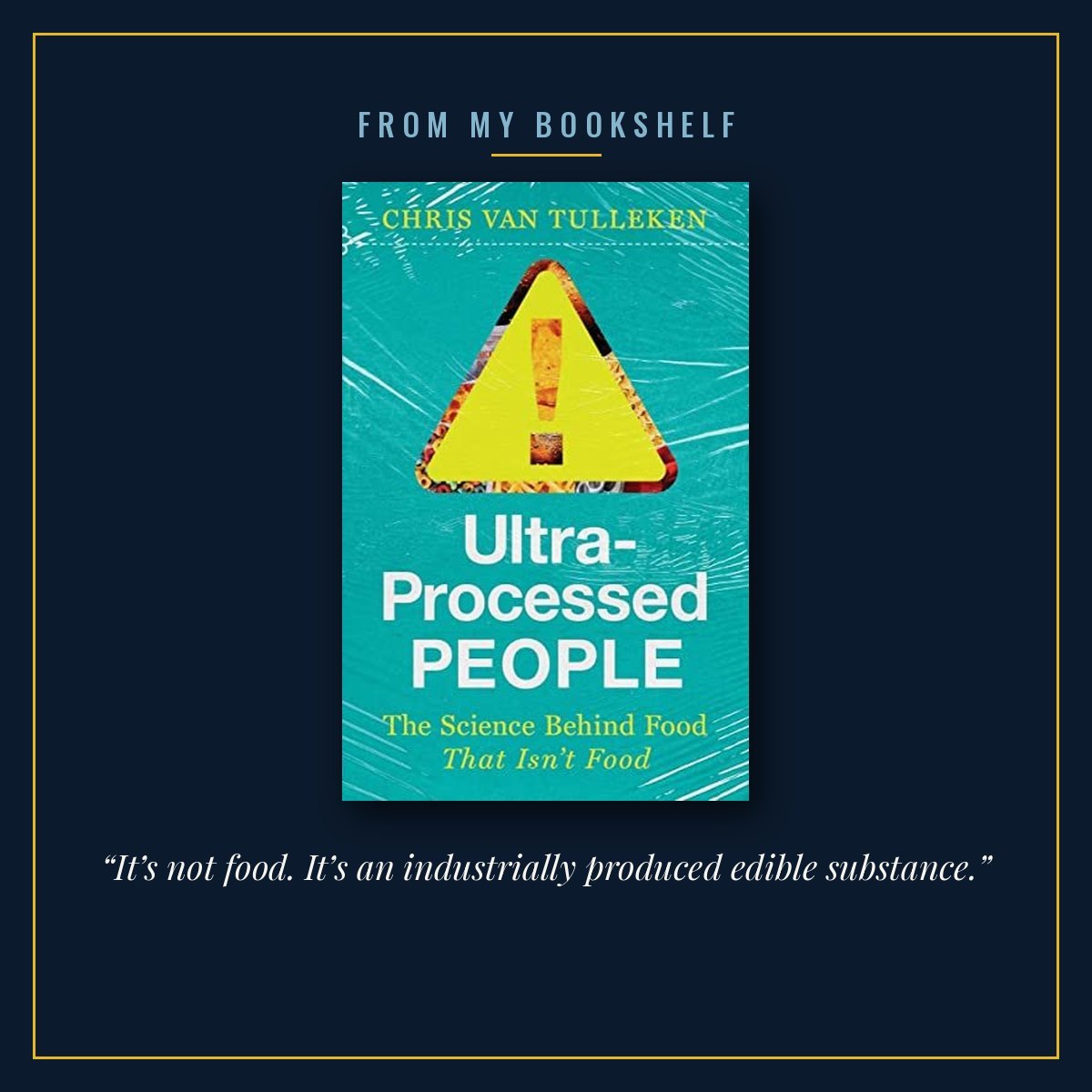
I’ll be honest, I don’t hand out many promises about books. I made one about this one. Read Ultra-Processed People and it will change the way you eat. And when you change the way you eat, you’ll feel better. I promise.
Chris van Tulleken is a doctor, and you might know him from the telly. For the book he spent a month eating a diet that was about 80 per cent ultra-processed food. That sounds extreme until you realise how many people already eat that way without trying.
He put on weight. He slept badly, felt sluggish and anxious, and was hungrier than usual. Brain scans showed changes too. All in a month, from food you can buy in any corner shop.
“It’s not food. It’s an industrially produced edible substance.”
So what counts? His rule of thumb is a good one. If it’s wrapped in plastic and has at least one ingredient you wouldn’t find in a normal kitchen, it’s probably ultra-processed. Think emulsifiers, modified starches, flavourings with long names. Once you start looking, it’s in more of your cupboard than you’d guess.
The definition he uses comes from a team of scientists in Brazil led by Carlos Monteiro. They sort food into four groups. Unprocessed or barely processed food, like fruit, veg, eggs and meat. Cooking ingredients, like oil, butter and salt. Simply processed foods, like cheese, tinned fish or bread made the old way. And then ultra-processed food, the stuff made from ingredients nobody keeps at home.
We live in an ultra-processed world we’re not really designed for. That’s the bit that stays with you. A lot of this stuff is soft, quick to eat and engineered to taste great. It slips past the signals that tell you you’re full. Companies spend fortunes making products you’ll keep reaching for.
He’s sharp on the money side, too. The companies making this food are huge, and they fund a lot of research, sponsor charities and shape the advice we hear. He doesn’t claim it’s a conspiracy. He just follows the money and lets you see where it goes.
He also takes apart the labels. A packet can say high protein, low fat or full of fibre and still be ultra-processed. Those claims are there to sell it. The ingredients list on the back is where you find out what you’re actually eating, and it’s often a long read. Pollan says much the same about health claims, which tells you something.
Why willpower was never the answer
Van Tulleken makes a point that matters here. If food is designed to be overeaten, telling people to just use more willpower misses the problem. That fits with something I wrote in Done Beats Perfect. I don’t believe in willpower. It might get you through a short spell, but it isn’t a long term plan.
What works better is understanding what’s going on. That’s what this book gives you. He’s careful not to lecture, and he doesn’t hand you a diet. He explains how the food is made and sold, and then he trusts you to decide. I think that’s why it works.
It pairs well with Michael Pollan’s In Defense of Food. Pollan tells you what to eat. Van Tulleken shows you why the other stuff is so hard to put down.
My juicing blog, Natural Juice Junkie, got over a million views in its first 18 months. So I’ve spent a fair bit of time thinking about what we put into our bodies. Even so, this book taught me plenty, and I’ve read it twice.
Around 2014 I started using an acronym, AIM, for health. Attitude, intake and movement. Most diets only touch one or two of those. This book is about intake, and what it does best is change your attitude to intake. Once you know what’s been done to a product to make you want more, it’s harder to see it as food.
You don’t have to clear out your kitchen tomorrow. Start by noticing. Read the back of a packet before you drop it in the basket. Notice how you feel an hour after a meal of real food, and an hour after the other kind. That’s usually enough to get you moving.
It’s the last of the 50 in my free guide, 50 Books That Shaped Me, and the one with a promise attached.
Give it a read. I’ll stand by the promise.


