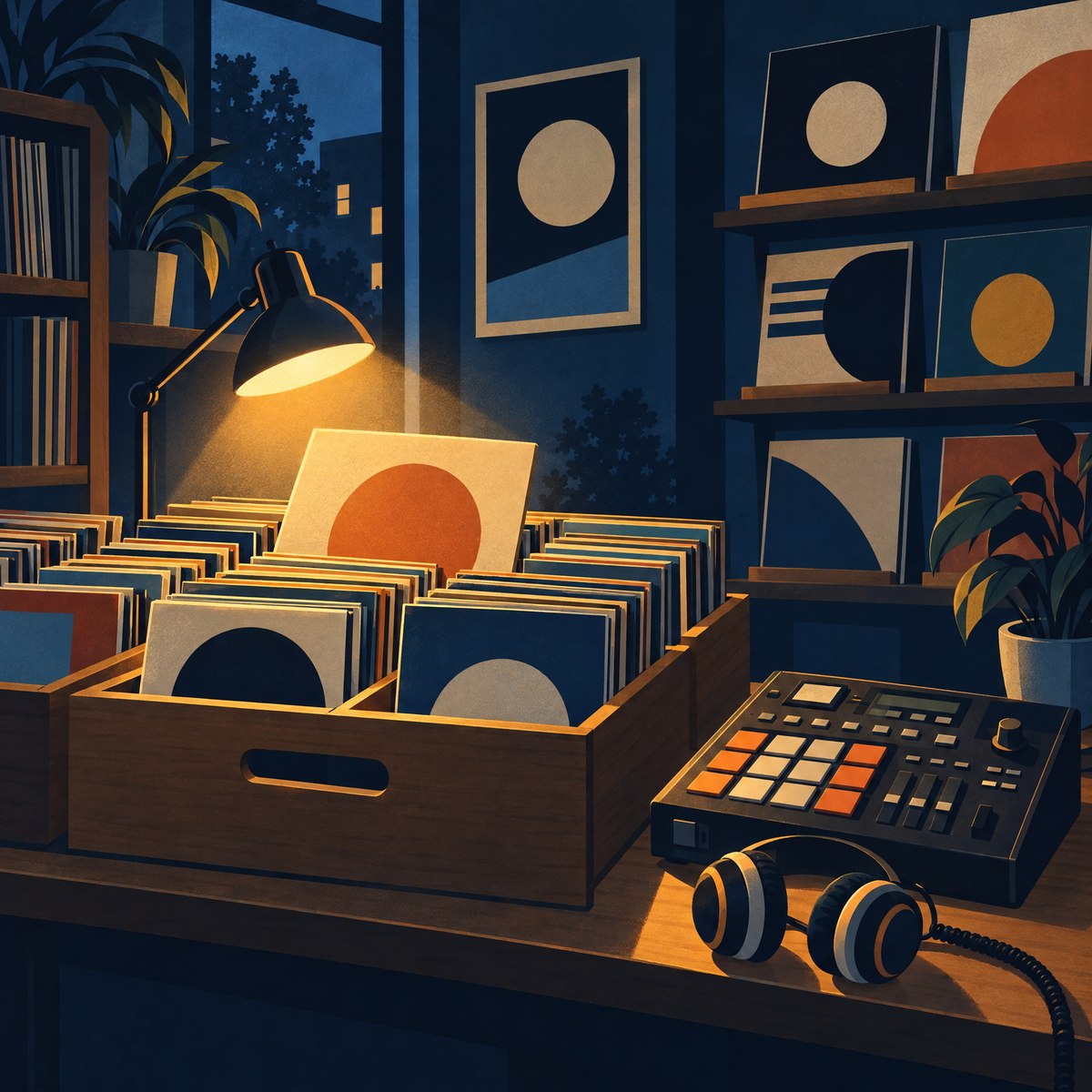
A basement in Sacramento, California. Records stacked floor to ceiling, thousands of them, most of them unwanted. Dust on everything. Dead bats in the corners.
And in the middle of it all, a young man who's just been given the key.
He's pulling out records nobody else wants. Forgotten jazz. Funk bands that never made it. Soundtracks to films nobody watched. Albums by artists who never got a second chance. Out of that pile, he's about to make one of the most original albums of the 1990s, without playing a single original note.
Who is DJ Shadow?
DJ Shadow is Josh Davis, an American DJ and producer. His debut album, Endtroducing....., came out in 1996 and was later recognised by Guinness World Records as the first album made entirely from samples.
In the 1980s he was a kid a very long way from the action. Hip-hop lived in New York. He lived in the suburbs outside Sacramento, falling in love with music that felt like it was being made on another planet.
He didn't wait for anyone's permission. As a teenager he started experimenting with a four-track recorder, inspired by records built from samples. He talked his way onto the university radio station and picked up remix work.
His first big break came from a long way outside New York or Los Angeles. In 1993, a small British label called Mo' Wax released his single "In/Flux". Britain heard him first. Remember that, because it comes back.
The basement
Every DJ knows the ritual. Crate digging. I spent years doing it myself.
You go to the record shop. You flick. You flick some more. You buy the odd thing on a hunch. Most of it's rubbish. But every so often, wedged between two terrible albums, there's gold.
Josh Davis dug harder than anyone. He'd spend hours every day in one Sacramento record shop. He came in so often that the owner decided he was a true music lover and let him into the basement. That was where the forgotten stock went, the records the shop had given up on. Almost every sample on the album came from down there.
Years later, filmed for the documentary Scratch, he sat among those stacks, waved at the piles and said: "Almost none of these artists still have a career."
Think about it. The raw material for a classic was other people's leftovers and other people's broken dreams, sold for pocket change.
How was Endtroducing made?
The second surprise is the kit. There was no orchestra, no session players and no big label budget. An Akai MPC60 sampler, a turntable and a basic tape recorder. That's pretty much it.
He'd bought the sampler in 1992 on the advice of fellow DJ Stretch Armstrong, instead of the machine most hip-hop producers were using at the time. It was still off the shelf. Anyone with the money could walk into a shop and buy one.
He started work in 1994 in his apartment, then moved to a friend's home studio in San Francisco, owned by producer Dan the Automator. It took two years of chopping, layering and rearranging. A drum break from here. A bassline from there. A few seconds of a voice from a record nobody remembered.
It wasn't a happy process. He's spoken about self-doubt and low moods finding their way into the music, and you can hear it. It's a melancholy record. Beautiful, but heavy.
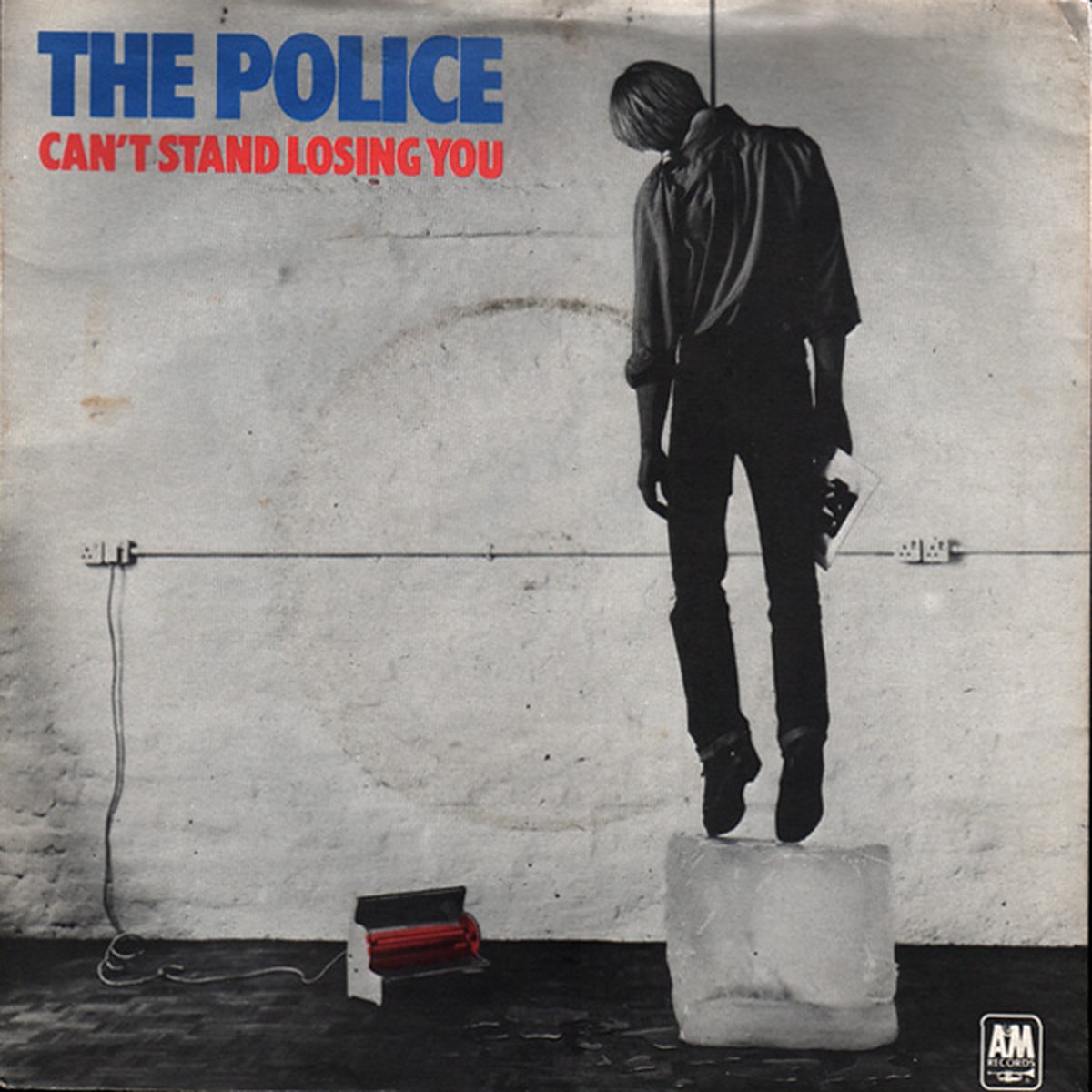
On 16 September 1996, Mo' Wax put it out. He was 24. Even the cover came from that world. It's a photo taken in the same record shop, of two friends from his crew flicking through the racks, one of them in a wig.
Why are we still talking about it three decades later?
At first the critics couldn't agree. One of the earliest reviews dismissed it as gloomy and mediocre. Another told readers they were incomplete without it.
Britain got it first, again, sending it into the UK top 20 and on to gold. America took longer. It crept to number 37 on a chart for up-and-coming acts.
The recognition kept building after that. The Guinness World Record. A place on Rolling Stone's list of the 500 greatest albums of all time. Talked about as one of the greatest records of the 1990s, and credited as an influence on albums from Radiohead's OK Computer to The Avalanches' Since I Left You.
Last week it turned 30, and it still sounds like the future.
The ingredients were never the advantage
This is the bit that stopped me. Nothing on that record was new. Every note had been played, sung and pressed onto vinyl by somebody else. Anyone could have walked into that shop. Anyone could have bought that sampler.
So what made it his? The choices. What he picked. What he ignored. What he put next to what. How long he let a moment breathe before cutting it. Which forgotten voice deserved a second life. Nobody could copy that part.
Any DJ will tell you the same. The records are just the beginning, and what you do with them is the whole job.
Is AI the new bargain bin?
Fast forward to 2026. Every business has access to the same AI tools. Most are cheap and some are free. They're sitting there like those records in the basement, available to anyone who walks in. Owning the tool gives you nothing over anyone else, because everyone owns it.
And there's a trap hiding in that. Put the obvious prompt into the obvious tool and you get the obvious answer, the same one your competitor got this morning. Same blog post. Same LinkedIn hook. Same proposal. Same "unique" value proposition.
I've watched this play out again and again. When businesses all look the same, customers can only compare them on one thing. Price. And nobody wins a price war, in the end not even the customer.
How do you stand out when everyone has the same tools?
Josh Davis had the same sampler as everybody else. What he also had was three things nobody else did.
His crates. Years of digging gave him a library of sounds nobody else knew existed.
His ear. The taste to know what was good, and the discipline to cut what wasn't.
His flip. The nerve to put things together in a way nobody else would.
Your business has all three. Most businesses just never use them.
Your crates are your raw material. Your customer stories. The questions clients ask you every week. Your hard-won opinions. The mistakes you'll never make again. The odd mix of experiences that brought you here. Nobody else has that exact collection. Feed that into AI and you get something only you could have made. Feed it nothing and you get what everyone else gets.
Your ear is your judgement: knowing when something sounds like everyone else, and having the confidence to bin it. AI can give you a hundred options in seconds. Picking the one that sounds like you is still your job.
Your flip is the arrangement. Two ideas from different worlds that nobody thought to put together. The new bit is how they meet.
A kid in a Sacramento basement made a classic out of a pile of records nobody wanted and a machine anyone could buy. The basement is bigger now, and it's open to everyone. So the digging matters more than ever.
What's in your crates that nobody else could copy? Tell me. And if you're not sure, message me. I'm always happy to help someone dig.