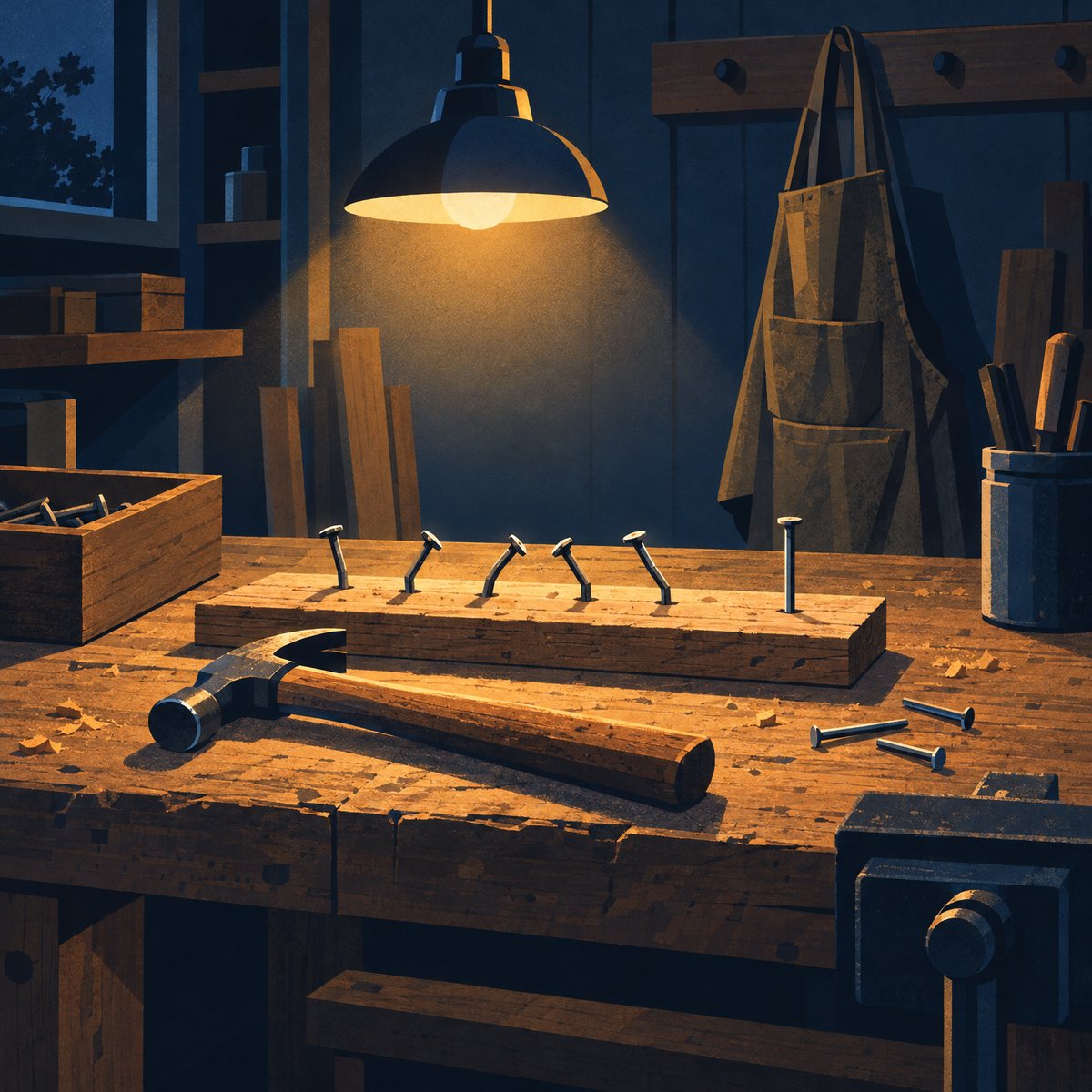
I learned judgement the slow way. I got things wrong on small stuff, long before it mattered on big stuff.
My guess is you did too. Most people who are good at their work learned it by doing the unglamorous version of the job first. The research. The first draft nobody wanted to read. The summary that came back covered in someone else's red pen. You did it badly, then less badly, then well enough that someone trusted you with something that mattered.
Nobody gave that a name at the time. We just called it being junior.
AI is brilliant at exactly the tasks junior people used to learn on.
First draft research. Basic analysis. Pulling a summary together from a pile of information. The grunt work. Hand that to an AI tool and you'll get something back in thirty seconds that would have taken a new starter three hours. And the AI's version will probably be cleaner.
That sounds like a win. In the short term, it often is.
But research coming out of the US is starting to show a catch, and it matters even if you run a ten-person business in Wolverhampton. The people who get the most from AI tools already know what good looks like. They use it to go faster. They can spot when the output is wrong. They know which answers to push back on.
The newer people get a different experience. They get something that looks like output and teaches them nothing. They can't tell if it's right. They haven't yet built the instinct that tells you something's off before you can explain why.
One set of researchers described it as a lift and a drag. The people who already have judgement get the lift. The people still building it get the drag, because the tasks that used to build it have gone to a machine.
So yes, you've saved time. You've also taken away the reps.
It reminds me of the lottery winner who's broke again five years later. They got the money without ever building the muscle that comes from earning it slowly.
Why this bites harder if you're small
A big company can, in theory, build its way around this. People still do the task themselves first, compare their version with the AI's and sit down with a manager to work through the gap. It's clunky but it works. Some of the smarter corporates are already doing it.
You probably can't build that. You don't have an L&D department. You don't have a manager whose whole job is to sit with a new person every week and coach the gap between what they produced and what good looks like.
In most UK small businesses, the owner is the infrastructure.
So if you're not building judgement into how your team works on purpose, nobody else will. It won't happen by accident, or because you hired good people, or because you bought good tools. Someone has to pay attention to it, and in your business that someone is probably you.
As it happens, that's what a business coach is meant to help with. But you shouldn't need a coach for it. You should be doing it yourself, every week, with every person on your team. The coach just makes sure you actually do.
The productivity mistake almost everyone is making
There's a simple reason most businesses aren't getting back what they expected from AI. They changed the tool and kept everything else.
Economists who study this say the payoff follows a J-curve. You put time and money in before you see anything back. And you only see it back if you change how the work gets done.
Most businesses skip that part. They bolt AI onto the same workflow, the same habits, the same way of thinking about the job. Then they wonder why nothing much has changed apart from a ChatGPT subscription.
The other problem is simpler still. Most owners have no idea what they want back from AI. Is it hours, quality, headspace or room to take on more clients? If you don't know what you're measuring, you can't tell if it's working. And if you can't tell, you can't improve it. You're just hoping.
"You can't manage what you don't measure" gets repeated so often it stops meaning anything. Here it means something very specific. Before you hand AI another task, decide what you want back. Write it down. Check in three months. It's simple, and most people still skip it.
Three things worth doing this quarter
Decide what you're trying to free up before you hand AI more work. Time is the obvious answer, and it's rarely the right one. Is it headspace? Or the capacity to do more of the work that grows the business? Get specific, as in "I want five hours a week back so I can spend them on X". "More productive" is too vague to check.
Protect at least one learning rep per role. Pick one task that a new or developing person still does themselves, without the tool, before they're allowed to hand it over. Small is fine, as long as it's real and it matters if they get it wrong. That's the task that builds the instinct, so don't automate it away.
Build in the conversation AI can't have. When something goes wrong, and it will, sit with the person and ask two questions. Why did this go wrong? What would you do differently? Keep it a thinking exercise and nowhere near a performance review. That conversation is what turns a task into judgement. It takes fifteen minutes. Most managers never have it.
I watched this happen long before AI showed up. Someone's brilliant at one part of the job, so they get promoted for it. Within weeks of leading a team, the gaps are obvious to everyone around them. Everyone except the person who promoted them, who was only ever looking at the good bit.
AI does the same thing faster, to more people. Someone can produce a polished report or a clean analysis without the years of getting it wrong that competence normally takes. The owner who's impressed by the output can't see the gap. The client can. So can the colleague, the moment something doesn't go to plan and there's no judgement under the polish.
Whether to use AI is a settled argument. You will. What I'd want to know is whether it's making the people in your business more capable over time, or only faster this month.