From The RULES, a six-week course I made in early 2017. Week two was about untruths.
I'm 22. My dad is in intensive care. It's cancer, and it's quick. Six weeks earlier I didn't even know he was ill. I'm stood by the bed with the family around him, watching him in pain, and one thought won't go away. Is this the last time I'll see him alive?
For years, that was all I could remember. The pain, and that question.
What I'd forgotten was that he was cracking jokes. Even then, he was looking after us. He was thinking about me, my brother and the rest of the family, not himself.
Now that memory makes me smile. It still brings a tear to my eye, but in a good way. It reminds me of the loving man he always was, instead of the way the cancer took him.
Untruths
The second of the five rules is untruths. Things you believe that aren't actually true. You're rarely lying to yourself on purpose. Think of it as contaminated knowledge. You just don't know that the thing you're relying on is wrong.
Memory is a big source of it. In 2016 a team led from the University of Warwick pulled together a run of studies where people were nudged to imagine events that never happened. Around a third of them ended up "remembering" those events as real.
I think everything you experience goes through three filters on the way in.
Deletion
We edit details out. My memory of Dad is the example. I'd kept the pain and cut out the jokes and the kindness. If you're holding a resentment, look for what you might have deleted. Was the other person really completely to blame? Did anything good come later that would never have happened without it?
Distortion
We remix things. Ever been chatting with family about something from years ago and someone says "That's not how it happened"? It's like that party game where a phrase gets whispered round a circle and comes out as something completely different at the end. Nobody means to change it. It just changes.
Why do we do it? I think mostly to protect our identity. We all need to feel safe, so we tweak memories until they fit who we think we are. If your identity is all about adventure, you might even make old stories more exciting than they really were.
Replication
We take the past and project it onto the future. "I never meet a good man." "Every boss I've had has it in for me." If you walk into a meeting expecting your boss to shout at you, you arrive with your guard up. Guess how that meeting goes.
The future hasn't happened yet. All any of us can do is guess, and we guess using memories we've already trimmed and remixed.
Feed the chimp first
Why would your brain do this to you? To keep you safe. Steve Peters explains it brilliantly in The Chimp Paradox. The quick, emotional part of your brain gets first go at everything, and it wants what feels safe right now.
I used to share a little trick with coaching clients who got the same craving at the same time every day. Chocolate, crisps, cake. What do chimps eat? Bananas. So have a banana first. Feed the chimp. If you're still hungry afterwards, then decide. The banana matters less than noticing who's making the decision.
Here's another one I used in a live session. How many of each animal did Moses take on the ark? Most people say two straight away. Moses never went on the ark. That was Noah. We hear the bits we expect and fill in the rest.
A belief only has to be disproved once
In science, a hypothesis stands until someone proves it wrong. And it only has to be proved wrong once.
Try that on yourself. "Nobody likes me." Find one person who does, and it's an untruth. "I can't find clothes that fit me." You're wearing some. "There's never anything healthy on the menu when we eat out." Look hard and there's nearly always one dish.
Those beliefs feel true because we only go looking for evidence that backs them up. So go looking for the one example that breaks it.
Try this
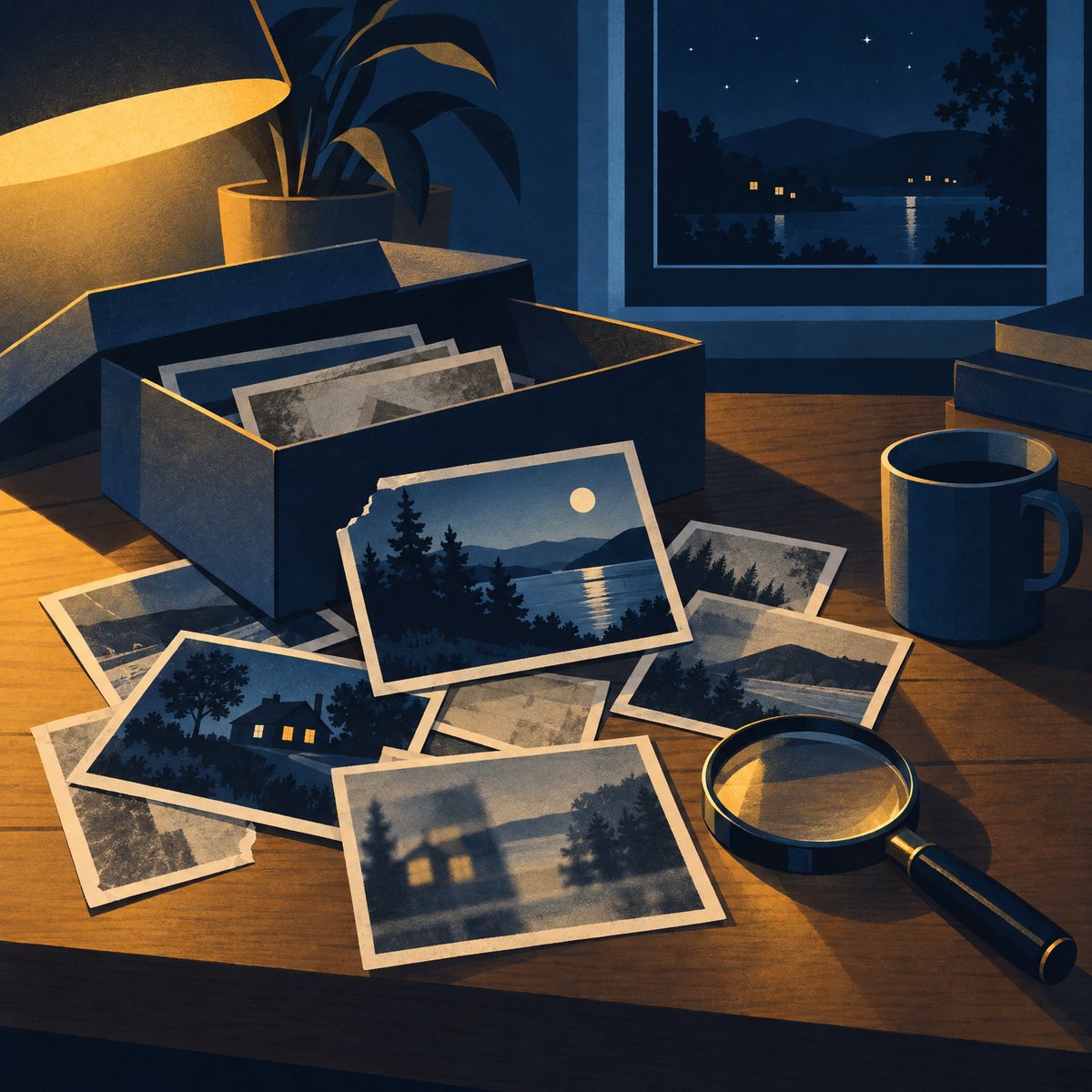
Pick a memory that still stings and write down what you remember. Then go looking for what you cut out. Think about what happened just before and just after, and look for anything in it to be grateful for.
Then take one belief that's been holding you back and find a single example that proves it wrong. One is enough. The stories that keep these beliefs alive are next, in You're holding the pen.
Go and find the bit you cut out. It might turn out to be the best bit.