The best summary of The Power of Now I know comes from a cartoon turtle. Master Oogway, in Kung Fu Panda, says yesterday is history, tomorrow is a mystery, but today is a gift. That’s why it’s called the present.
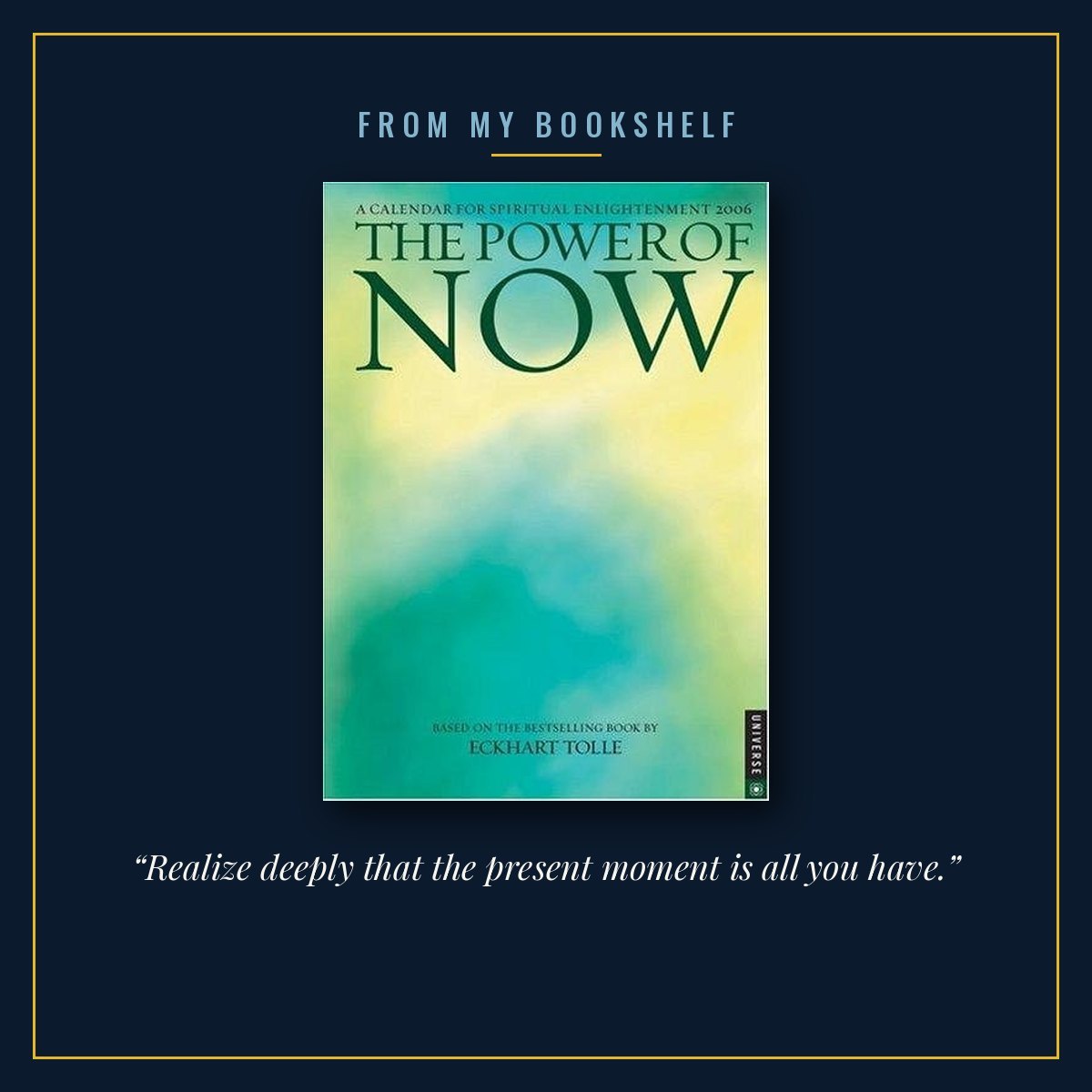
The line’s older than the film and it isn’t Eckhart Tolle’s, but it does the job. Let’s keep this really simple, because Tolle’s book is about something simple. The moment you’re in is the only one you ever actually have. The past is a memory. The future is a guess. Right now is where your life happens.
“Realize deeply that the present moment is all you have.”
Simple doesn’t mean easy, and the book isn’t always an easy read. Tolle says most of our pain comes from living in our heads, replaying a past we can’t change and rehearsing a future that hasn’t happened. He talks about the voice in your head that never shuts up. His big point is that you can watch that voice, which means there’s a part of you that’s separate from it.
The first time you notice that, it’s a bit odd. You catch yourself halfway through an argument with someone who isn’t even in the room. Once you’ve seen it, you start seeing it everywhere.
Tolle got there the hard way. He writes about years of anxiety and depression in his twenties, and a night when something in him shifted. Afterwards he spent a lot of time just sitting on park benches, at peace. The book is him trying to explain what changed.
I read it in May 2016. Later that year, one of my advent calendar videos leaned on this book. The message was that our darkest moments are often the ones just before things change. When it feels like everything’s coming to an end, keep going.
Being here and still having goals
The bit people get wrong is thinking the present means giving up on the future. You can still have dreams, ambitions and goals. Tolle’s point is that you can only get to them from here, from where you actually are. Fighting where you are just burns energy you need for the next step.
He makes a useful split between clock time and what he calls psychological time. Clock time is practical. You plan the trip, you book the train, you set the goal. Psychological time is when your head moves in and lives there, worrying about what’s coming or chewing over what’s gone. Use the first. Watch out for the second.
He’s also got a name for the old emotional hurt we carry around: the pain-body. Something small happens, and suddenly you’re reacting to ten years of stuff instead of the thing in front of you. His advice is to notice it when it flares up. Once you’ve spotted it, it has a lot less hold over you.
I wrote something similar in Done Beats Perfect. Willpower is nearly always us using grit to fight things we can’t change. Acceptance works better. Accept where you are, and then you can take the next step.
Tolle uses the word surrender for this, and so did I. It sounds like giving up. It means the opposite. You stop arguing with what’s already happened, so you’ve got your hands free to do something about what happens next.
In that book I also wrote about a time when I was most definitely a warning to others. What turned it round was a decision, and part of that decision was to be fully alive and present. Being present was the way out.
DJing is a decent lesson in it too. You can’t mix the record that’s just finished or the one coming up after next. You can only work with what’s playing and the people in front of you. That’s what reading the room really means.
The only moment you truly have is the one you’re in. The more you realise that, and the more you appreciate what you have in it, the better life gets. You’re actually living it.
Tolle’s suggestions for getting there are small. Notice your breathing. Feel the inside of your hands. Catch your mind wandering off and bring it back, without giving yourself a hard time for drifting.
There are more books like this one in my free guide, 50 Books That Shaped Me, to read whenever suits. Now, ideally.
Where’s your head right now, while you’re reading this?