I wear a ring with four words on it: This too will pass. I held it up to the camera on my podcast a few weeks into the first lockdown and couldn’t get it in focus. It works both ways, by the way. The good times pass as well.
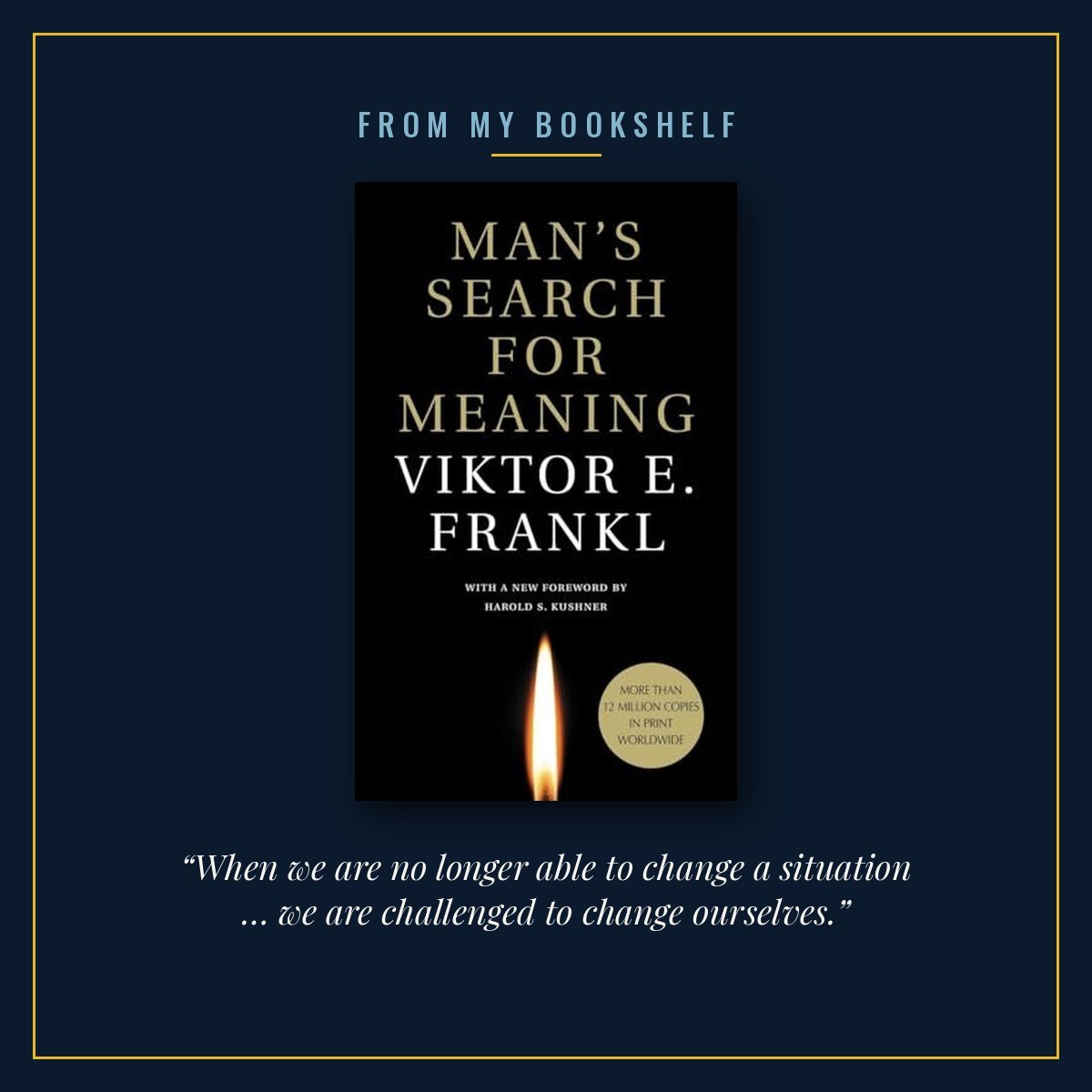
On that same episode I picked two books for anyone who was struggling. One was The Diary of Anne Frank. The other was Viktor Frankl’s Man’s Search for Meaning. I wasn’t comparing lockdown to what they went through. But they lived through real isolation, with no internet and no Netflix, and they wrote down how they got through it.
I’m an extrovert. I’m used to being around people, and suddenly my world got a lot smaller. I was somewhere I wanted to be, with people I wanted to be around, and I still felt it. Plenty of people listening weren’t that lucky. That’s why I picked those two books.
Frankl was a psychiatrist from Vienna. During the Second World War he was held in Nazi concentration camps, Auschwitz among them. The first part of the book is what he saw there. The second part sets out logotherapy, his idea that our deepest drive as humans is to find meaning.
He shows the difference between what happens to us and the meaning we give it. He lived through some of the hardest things anyone could imagine, and somehow kept hold of hope and survived. He describes how he could tell which prisoners were going to die, because they’d given up on themselves. He watched it happen.
“When we are no longer able to change a situation … we are challenged to change ourselves.”
Frankl couldn’t control the guards, the hunger or the cold. What he still had was the way he chose to meet it. He also quotes Nietzsche on this: if you’ve got a why to live for, you can bear almost any how. That’s what the book comes down to for me. Having a why so strong that you figure out the how.
Frankl says meaning comes from three places. Something you do or create. Someone you love. And the attitude you take to suffering you can’t avoid. In the camps, he kept himself going partly by picturing life after the war. He imagined standing in a lecture hall, telling people what he’d lived through. He gave himself a future to walk towards. In a way, this book is that lecture.
Happening to you, or for you
Some years ago someone asked me a question I’ve never forgotten. Has life happened to you, or for you?
I used to be a proper “why does this keep happening to me” person. Once I started asking what I could learn from the so-called bad stuff, a lot shifted. It’s also made me better at understanding what other people go through.
Nigel Risner and I talked about this on an early episode of our podcast. Nigel uses a simple formula, E + R = O. The events in your life, plus your response, give you the outcome. A lot of the events are out of your control. The response is yours. It’s in my book, Done Beats Perfect, too, where I called it being response-able.
Nigel tested me on it. We were sat about seven feet apart and he asked if he could make me feel good or bad from where he was. Not unless he walked over and punched me, I said. Nobody sat seven feet away can make you feel anything. How you take it is down to you.
Nigel’s other rule on that episode was that you’re allowed to be annoyed for a bit. His limit is nine minutes. Then you let it go. I like that, because it’s honest. Nobody’s asking you to feel nothing. You just don’t have to stay there.
I’m not going to pretend any of my problems compare with Frankl’s. They don’t come close. But if he could find meaning where he was, most of us can find a bit in a bad week.
It’s a short book. It turns out it’s Nigel’s favourite too, and he calls it short and life-changing. I’ve read it four times now.
It sits in the meaning and the now part of my free guide, 50 Books That Shaped Me. Those are the books I keep coming back to.
A friend of mine says there’s never been a day he didn’t get through. I’d add one word to that. Yet.