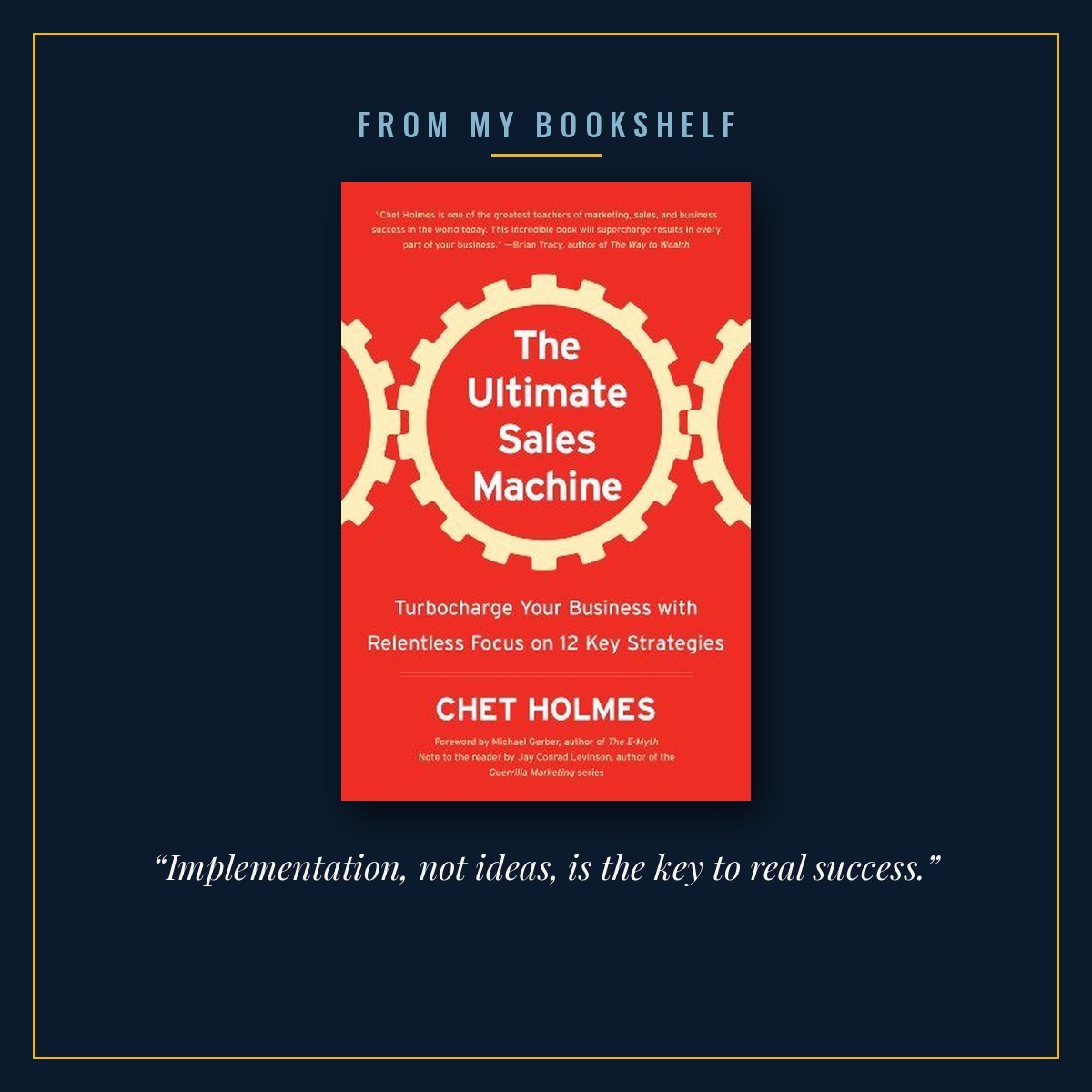
One hundred names. That’s where it starts, and it’s the idea I try to explain to just about everybody in business.
It’s called the Dream 100, and it comes from Chet Holmes and his book The Ultimate Sales Machine. I actually found it first in Russell Brunson’s DotCom Secrets, where Russell credits the idea to Chet. So I went back to the source. My Goodreads says I’ve read it twice.
Holmes was a sales trainer who built his whole approach around a few things done well, over and over. The book sets out twelve strategies for building a sales and marketing system. It covers how you manage your time, train your people, run meetings and win customers.
Running through all of it is the line I chose for my guide. “Implementation, not ideas, is the key to real success.” Holmes cared about what you actually do, and how often you do it. Given the name of my book, that was always going to land with me.
The Dream 100 is the part most people remember. You write down the hundred people or businesses you’d most love to work with. The ones who’d make the biggest difference to you if they said yes. After that you go after them, patiently and repeatedly, with useful stuff. Holmes’s view was that most people give up far too early, and the ones who keep showing up win.
Holmes also believed in teaching your way in. Rather than leading with your product, you lead with something useful about your buyer’s world. What’s changing in their market, say, or what their own customers want. Give people better information than anyone else and they start to see you as the expert before you’ve sold them anything.
Why it works even if they never buy
If you’re clear on who your Dream 100 customers are and you focus on them, you’ll achieve some phenomenal things. Even if they’re not the people you end up working with, you attract people like them. That’s the part people don’t expect.
Here’s why. To get the attention of your Dream 100, you have to get really clear on what they want. After that, you have to find a way to say it where they’ll see it. Once you’ve done that work, everyone who looks like them starts noticing you too.
Who to put on the list is a question that keeps coming up with business owners. I’ve run planning days where, room after room, people were asking the same thing: who should be on our Dream 100? It’s a good question, and it’s worth a lot more than five minutes.
What’s changed since Chet wrote it
I think the principles have moved on since the book came out. Holmes was working in a world of letters, phone calls and meetings. Now you can get around your Dream 100 by listening to their podcasts, following them on LinkedIn, and watching their YouTube videos.
Almost everybody is putting something out, whether that’s the occasional post or a regular show. You can learn from them and engage with them. You can build a relationship with their content before you build one with them as people. By the time you actually speak, you’re not a stranger.
If you’ve been listening to someone’s podcast for months, you know what they care about. You know the problems they keep talking about. When you finally reach out, you can talk about something that matters to them, in their language. That’s a very different conversation to a cold email that could have gone to anyone.
And all the old-school ideas in the book still work too. Sometimes they work better, because most people have stopped doing them. A handwritten note or a parcel through the post stands out a mile when everyone else is sending the same automated message.
Don’t get me wrong, there’s a lot in this book beyond the Dream 100. But if you only take one thing from it, take the list. Write the names down, and keep turning up for them with something worth their time.
It’s in the selling and serving chapter of my free guide, 50 Books That Shaped Me. Next to it are a couple of books on giving people more than they expected.
So who’s top of your list?