
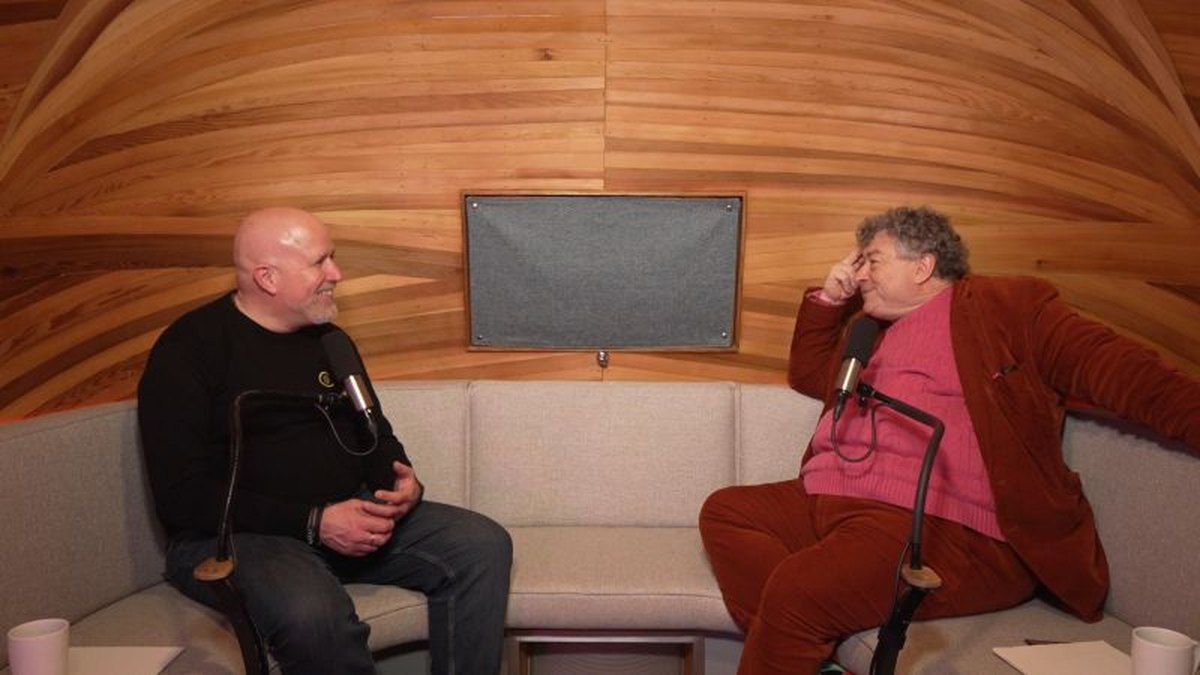
I'm at BizX, talking to Rory Sutherland, and he shares a dark little thought experiment with me.
A psychopath has trapped you in a basement. He says, "Tell me what the weather's like outside and I'll let you go. Get it wrong and you die."
What's the single best answer?
"The same as yesterday."
Statistically, that's your safest bet. Weather tends to stick around. If it was sunny yesterday, it's more likely than not to be sunny today. It's the answer that keeps you alive.
And that's exactly the trap that data-driven businesses fall into.
The past is all the data has
Nearly all big data comes from the same place. The past.
The past is data rich. The future is invisible. So when a business makes every decision from its data, it keeps answering "the same as yesterday". Same customers, same channels, same messages, same products, slightly optimised.
It feels safe. Nobody ever gets fired for following the data. If it goes wrong, you can point at the spreadsheet.
But it guarantees one thing. You'll never do anything the data couldn't already see coming. And nor will your competitors, because they're looking at the same kind of data and reaching the same kind of answers. Everyone ends up in the same place, doing the same thing, competing on price.
I put it like this. If you drive your car only looking in the rear-view mirror, you can expect to crash.
The opening most businesses will ignore
Rory made a related point in a podcast interview that's stuck with me. Everyone is stampeding towards AI right now. Cutting costs, automating everything, quietly pushing more of the work onto their customers and calling it efficiency.
His view is that it creates an opening. The farmer's market grew up as an answer to the soulless superstore. London City Airport became the sane person's alternative to the Heathrow ordeal. In the same way, he thinks there'll be a real, growing market for businesses that guarantee a human touch.
You won't find that opportunity in last year's data. By definition, it isn't there yet. The herd always creates an opening for whoever is brave enough to go the other way.
None of this means throwing your data away. It's brilliant at telling you what's already working and what's clearly not. Use it for that.
Just don't let it be the only voice in the room.
Test things you expect to fail. If you only test things you're already confident about, you'll only ever confirm what you know. Every so often, a test you were sure would flop will surprise you.