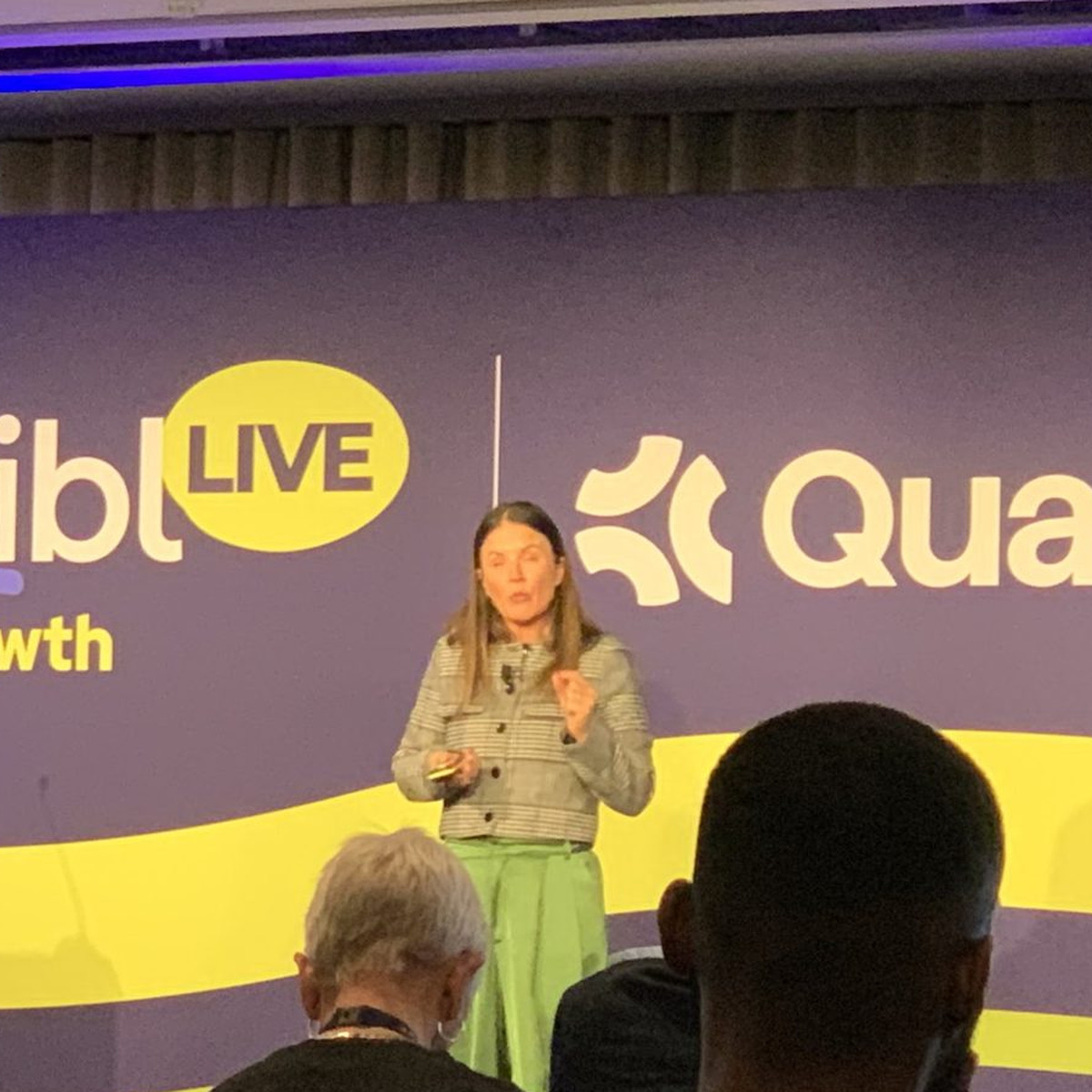
Tracey Pilon opened aiblLIVE in London on 20 October with a show of hands. She asked how comfortable we'd be letting AI do our food shopping, buy our make-up, book a holiday or sort a mortgage.
It was a neat way of showing where we are. Most of us are happy to let AI help with small stuff, and we get more nervous as the stakes rise.
Marketing to something that never gets tired
Tracey is AI Acceleration Director at Microsoft, and her talk was about what she called the race to zero UI. In plain English, a world where people don't visit your website at all. Their AI assistant does it for them, and comes back with an answer.
Her point was that for the first time, the thing you're marketing to might not be a person. "That agent will never fatigue, and it has access to every tiny bit of information that is out there in the web," she said. "So no longer can brands just rely on perception; they have to rely on performance as well."
That's a big change for anyone who has relied on a good-looking website and a bit of charm.
What the research says
Microsoft Advertising surveyed 1,000 consumers for a report called The AI Web: Race to Zero UI. Nearly 60% said they were ready for AI agents to replace traditional websites for tasks like shopping, travel planning and managing money. Two caveats: those were US consumers, and Microsoft sells AI advertising, so it has a stake in the answer.
The same survey asked what worries people. Privacy and data security came top at 49%. Loss of control over decisions came next at 45%, and the AI misunderstanding what they actually want at 44%.
Tracey put it well: "Building and breaking trust can happen exactly at the same time."
It's worth keeping the scale in proportion too. Microsoft Clarity looked at more than 1,200 publisher and news sites and found that AI referral traffic grew by about 156% over eight months. Huge growth. But the same study says AI referrals are still under 1% of total traffic. It's coming, and it isn't here yet.
Write the way people ask
The most practical bit of Tracey's talk was about content. Her advice was to write the way people actually prompt.
Nobody asks an AI for "three-seater sofa, grey, fabric". They ask for "a sofa that gives me the Soho Farmhouse look at half the price." If your website only has the spec sheet, the agent has to guess whether you're the answer. If it has plain-language descriptions, comparisons and answers to real questions, in your customers' own words, you make that job easy.
For a small business, that's good news. What it takes is knowing what your customers actually say when they describe their problem. Most owners know that already. They've just never written it down on their website.
How would you feel if a customer's AI assistant read your website and came back saying, "These are the people you want"?
Do that and your site stops being a brochure and becomes the clearest answer on the internet to the questions your customers ask. That helps the humans who visit too.
If you want somewhere to start, think of five questions customers asked you in the last month, word for word. Does your website answer each one plainly, in those same words?