
Most selling goes wrong because someone asks for commitment before they've earned permission. I see it constantly.
They pitch too early. They explain when nobody asked. They try to close while the other person is still deciding whether they even care.
Usually it's a problem of order, and confidence has very little to do with it. Get the order wrong and everything feels heavier than it needs to be.
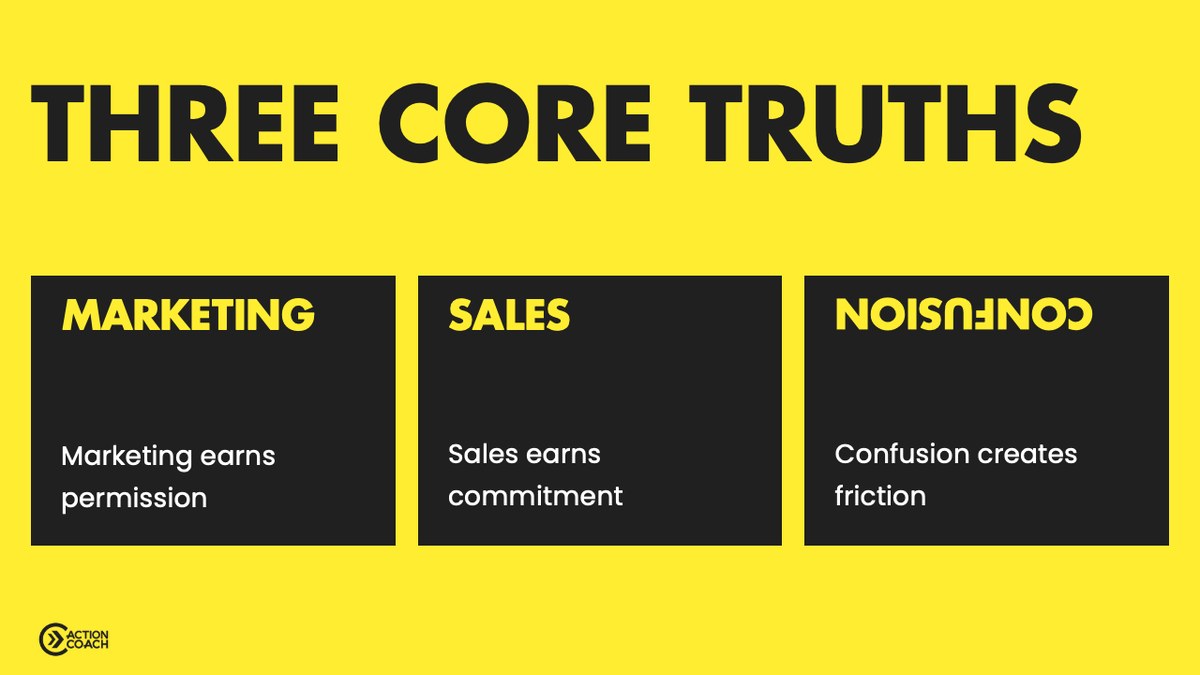
Here's the simple version. Marketing earns permission, and sales earns commitment. Mix them up and you create friction, which slows everything down.
What marketing is actually for
Posting more, buying more software, automating outreach and shouting louder all get called marketing. Marketing has one job.
Earn the right to a conversation.
That's it. Permission looks like a reply, a booked call, a follow-up question, someone leaning in. Impressions and vague awareness don't count, and neither does engagement for its own sake. You're looking for real signals that someone wants to talk.
Selling at hello
You've felt this. You're at a networking event and you ask someone what they do. Instead of a conversation, you get the full pitch. You didn't invite it. You didn't show any interest. You certainly didn't give permission. And it feels awkward.
Why? They're pushing for commitment before you're even curious. You're still at hello.
When the order's wrong, objections feel heavier, follow-ups feel forced and trust gets fragile. So we decide sales is hard. Sometimes it's just early.
The order that works
There is a sequence, and it goes like this:
- Be known. Familiar enough that your name doesn't get deleted on sight is plenty.
- Be trusted. Trust comes from proof and from specifics, from showing you understand their world.
- Be respected or liked.
- Ask for commitment.
Most people try to close at step one, and that's hoping for the best.
Marketing earns permission when you show what you know before you pitch, show outcomes before you talk fees, use their language before you bring in yours and diagnose before you prescribe.
Permission is subtle. It's the moment someone thinks: "Okay. This feels relevant."
When that happens, sales can do its job, which is getting a commitment. A diary slot confirmed. A serious budget conversation. A decision to change. It has to come after permission, though. Always.
The problem with "personalisation at scale"
This is where I think the industry has drifted. If you're doing the same thing to 500 people, you're just swapping details in. Company name. Recent LinkedIn post. A line about their funding round. We've redefined personalisation to mean "contains one specific detail", and your prospects can feel it.
Look at your numbers honestly. Open rates might look healthy. But what are your real conversation rates? Count the actual replies, the booked meetings, the deals that moved.
When someone can tell they're one of hundreds, trust drops before it begins. Response quality falls apart, and we blame the offer.
When I run outreach myself, I start with who actually matters. Then I look at what they're saying in public: how they describe their challenges, and what tension sits underneath. That's where a conversation starts.
Same tools, more attention. AI can do the research at scale. Trust still needs proof you understand their problem, proof you've solved it before and proof you're a person.
Look at your last few outreach attempts. Did you ask for a demo before you'd earned any relevance? Did you send qualification questions before showing you understood them, or call something personalised because it had their company name in it?
If so, you were early, that's all. Slow it down and earn permission with what you know and with proof first. The commitment comes after.
And if scaled personalisation really does work for you, I'm interested. So how many real conversations did your last campaign start?